
The Psychology of Imperfection. Lucian Freud


Why Are We Afraid of the Naked Elderly Body?
The Freud family gave the world two extraordinary observers of human nature.
One, Sigmund Freud, looked beneath the surface of the mind.
The other, his grandson Lucian Freud, looked beneath the surface of the body.
At first glance, his paintings can be uncomfortable. The bodies are heavy, ageing, imperfect. They refuse to flatter either the model or the viewer.
My first impulse was simple: to look away.
Then I asked myself a more interesting question:
Why?
Not because the bodies were naked. We have admired naked bodies in art for thousands of years. We visit museums filled with Greek sculptures, Renaissance Venuses, and idealised heroes without embarrassment.
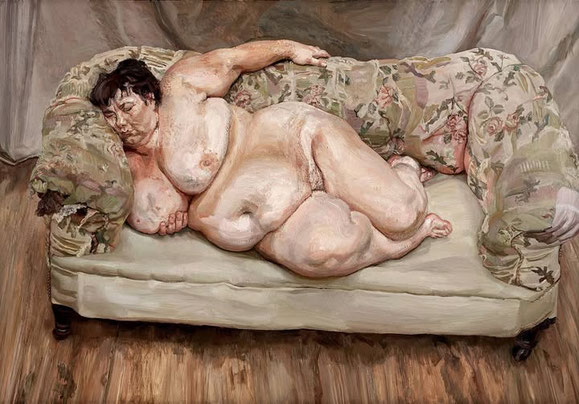
What unsettled me was something else.
These bodies did not ask to be admired. They did not apologise for age, gravity, wrinkles, or weight.
They simply existed.
His models simply refused to pretend. The painting did not ask me to judge the body. It asked me to understand my own reaction to it.
The first reason, I believe, is that we are not afraid of the elderly body at all.
We are afraid of the future we recognise in it.
We spend enormous energy trying to defeat time. Cosmetics, fashion, diets, and surgery all promise the same illusion: that age can be negotiated with.
Lucian Freud refuses to negotiate.
He simply says:
Look.
Beauty comforts us.
Imperfection confronts us.
Sigmund Freud believed that the mind protects itself by pushing uncomfortable truths out of awareness.
That is exactly why we instinctively look away.
The painting does not create our anxiety.
It reveals it.
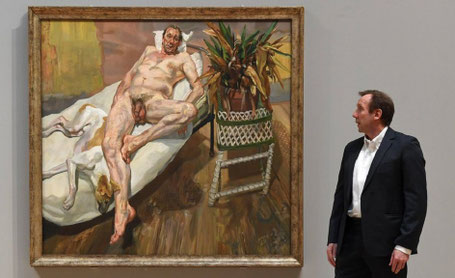
We know that old age exists.
Yet we live as though it belongs to other people.
Then the painting quietly says:
"No. It belongs to you as well."
That is the moment when the urge to turn away appears.
Another reason may lie in narcissism.
Freud wrote about primary narcissism and our attachment to an idealised image of ourselves.
Modern culture constantly reinforces that image:
youth,
smooth skin,
slenderness,
control.
Lucian Freud destroys this ideal.
It is as if he says:
This is also human.
And suddenly the viewer becomes uncomfortable.

Don't you think this is brilliant?
Lucian Freud was not painting old naked bodies. He was painting our reaction to them.
Sigmund Freud spent his life exploring what the mind prefers to hide.
His grandson Lucian Freud seemed to explore what the eye prefers not to see.
One Freud explored the unconscious.
The other explored what we do not want to see consciously.
Lucian Freud was painting the illusion that we can escape time itself.
He was never asking us to look at the body.
He was asking us to look at the part of ourselves that wanted to turn away.
Why did we?
That question may reveal far more about us than about the painting.
The Psychology of Imperfection is an ongoing series exploring what great works of art reveal about human nature—and about ourselves.

